Showing posts with label CPG. Show all posts

Tuesday, April 12, 2016

Canned Beverages Making a Come Back?

One of the trends I'm anticipating over the next few years is the revival of canned beverages.  The twist is that this time we should expect to cans popping up in beverage categories where the packaging form was previously not leveraged on a broad scale. I believe two categories in particular are primed for growth: canned wine and canned water.

The case for canned wine is simple - single serve and convenience.


The case for canned water is also simple - the increasing backlash against plastic bottles.  I'm a big fan of this resealable cap execution that Noah's is currently offering:


Saturday, August 24, 2013

The Yogurt Wars Heat Up and YOPLAIT Appears One Step Behind . . . AGAIN

The US yogurt wars are heating up again and about to become even more intense...and Yoplait appears to be one step behind again.

For years the US yogurt market was dominated by Yoplait and Dannon. However, five years ago the US market was fundamentally changed with the emergence of Chobani, which helped usher in the Greek yogurt revolution.

As Greek yogurt mainstreamed growing from 4% of the US yogurt market in 2008 to nearly 45% in 2012, Chobani was transformed a small challenger brands into a $1 billion power-player that is giving Yoplait and Dannon a run for their money.

Dannon reacted with the 2011 launch of its Greek yogurt sub-brand Oikos. Oikos growth has been tremendous, surpassing over $400 million 2012, which is a ~45% growth from its first year sales. Not only was Dannon able to leverage the brand to grow the overall Greek Yogurt segment, but also start winning back some share from Chobani by advertising its superior taste behind a claim that Oikos is preferred 2 to 1 over the leading brand.

On the other hand, more than 2 years later Yoplait is still trying to figure out how to win in Greek yogurt.  Yoplait's initial entry into Greek Yogurt was a bust...as was its first relaunch attempt in 2011. Now Yoplait, which is owned by General Mills, is hoping to make up for lost ground by relaunching its Yoplait Greek yogurt again, this time behind a new formula, packaging and advertising. In it's new TV ads, Yoplait declares that "it's time healthy gets a dose of happy" and carry the tag line "it's time to lick the lid again."


The insight Yoplait is basing its bet on is that American consumers will prefer a less sour Greek yogurt and fruit pre-blended into the yogurt, as opposed to being on the bottom of the container.  I personally, don't buy that this positioning will be enough to catch up to Chobani and Dannon, but it will likely be sufficient to remain relevant in the category.

Meanwhile, as Yoplait focuses on and invests in getting its base Greek yogurt offering right, the yogurt market is about to take its next major transformation - adult yogurts with flavor enhancing add-in. 

  • First Pepsi's Quaker unit launched Muller (a new joint venture with a European based yogurt company) that features an extensive line of flavor add-ins.  Expect major marketing pushes behind this product over the next several months

  • Chobani's answer was to launch  "Flip" and "Bite" sub-lines.


  • Now Dannon is jumping into the game via its recent acquisition of YoCrunch, the market leader in yogurt mix-ins.  YoCrunch features 27 different varieties of mix-ins (though most are geared at kids).  Not only does the YoCrunch acquisition give Dannon instant market share in this segment, but more importantly instant access to critical packaging capabilities that will eventually allow Dannon to bring this innovation to their Dannon brands.
While Yoplait does have a mix-in granola offering...


...its already a step or two behind and is going to have to quickly invest in major innovation to keep its offering competitive. But in all likelihood, Yoplait will be spending the the next few years playing catch up again.  Proof a market leader can never stop innovating or it risks being surpassed.

Saturday, July 20, 2013

Mr. Clean Re-Stage

As a Mr. Clean marketing alum have to say I love the new re-stage of the Mr. Clean brand.  It does a great job of starting to form a more emotional connection and bringing to life the product benefits in a way no other clean brand can...


"I take down arm wrestling opponents like I take down grime, stains and dirt. Things got pretty intense with these bikers, but we're all friends now" -Mr. Clean

Great job Mr. Clean Team!  

On a side note, I'm also glad to see the the Magic Eraser Handy-Grip is finally being launched, something that was suppose to happen 5 years ago, but that's a longer story... 

Pepsi acquisition of Mondelez?

Activist shareholder Nelson Peltz has recently gone public about his latest bid to shake-up the consumer package goods industry by pushing PepsiCo Inc to buy Mondelez International Inc for more than $62 billion. As part of his plan, Pepsi would then spin-off its soft drink business to become a global snack food behemoth.

Give Peltz point for thinking big and seeing the power of a tremendous power combination. Pepsico is a $65 billion dollar beverage and food conglomerate with 22 billion dollar brands. It includes it's Pepsi-Cola beverage division, Frito-Lay brands, and Quaker, Tropicana and Gatorade. The Frito-Lay North American business unit is a $13 billion business with a clear #1 share of the snacks category. While Mondelez is a self-described "$35 billion, global snacks powerhouse" sold across 165 countries and 9 billion dollar brands.  It's power brand portfolio primarily covers the biscuits category (e.g., Nabisco, Oreo, Chips AhoyWheat Thins, Triscuit, Ritz) and Chocolate/Candy/Gum (e.g., Cadbury, Toblerone, Trident, Halls). The combination of these two companies is initially a bit mind-boggling.

Potential Benefits:
  • Given Frito-Lay already owns the salty-snack aisle, while Mondelez's Nabisco owns the cookie/cracker aisle, the merger would give the new company dominant control of the snack section of your grocery store. This scale would give the company incredible negotiating power with suppliers/retailers and create significant advantages over remaining competitors.  
  • The deal could offer huge potential cost savings by combining direct-store-delivery (DSD) networks as well as expanded DSD reach for Nabisco into the convenience store channel
  • It also creates large international expansion opportunities for Frito-Lay by leveraging Cadbury's legacy international sales & distribution networks (Kraft purchased Cadbury for nearly $20 billion dollars in 2010 before the company was split into Kraft and Mondelez to leverage these networks to boost its own international expansion) 

Potential Challenges:
  • Pepsico is said to be resistant to the idea of spinning-off its beverage business. That said, the Kraft/Mondelez split was also initially surprising, so while this is a challenge, it may not be an immoveable barrier
  • Mondelez has under-performed expectations since the Kraft spin-off, weighed down by economic woes in Europe among other factors, and a merger with Pepsi does nothing to help ignite top-line growth. Without steady growth, Mondelez is significantly less appealing
  • While the combined snack food behemoth would surely benefit from international expansion into fast growing developing markets, its lack of product diversification could put its core US business at risk to rising health trends in the US and in the rest of the developed world (much like the Pepsi soda business is today)
  • There are also likely major cultural challenges in merging Mondelez and Frito-Lay. For example, the two companies have historically had very different brand management frameworks. Mondelez/Kraft has a very well respected general management approach, while Frito-Lay has historically focused their marketers energy more towards advertising. It would be interesting to see where a joint organization would end up. No doubt the cost of merging the two organizations together would be costly and the integration likely taking years to come to full fruition
  • You'd have to imagine that a deal this size would at least raise some anti-trust caution flags, given the concentration in the snack food and the DSD structure of the category that essentially makes it nearly very difficult for new competitors to win shelf space
Initially the idea seemed very farfetched, but the more you consider the tremendous scale opportunity from the potential acquisition/merger it actually becomes quite an intriguing possibility that would no doubt remake the CPG landscape. 

That said, even if Peltz is able to convince the boards and shareholders, a lot would still have to go right for the merger to be a success. Take for example the P&G and Gillette merger. While one could argue that the P&G acquisition of Gillette has been a large success, much of the upside P&G initially thought it could easily capture by slapping the Gillette brand on its historic female skin/body care capabilities to win in men's skin/body care still hasn't come to fruition despite several years of trying and hundred of millions of dollars in investment.

It will be interesting to see how the Pepsi/Mondelez situation plays out, if nothing else its fun to think about the potential of the combination.

Saturday, April 20, 2013

Bounty DuraTowel . . .I'd Understand Stronger or More Convenient, but Cleaner?

Procter & Gamble launched the new Bounty DuraTowel in February...


According to the company website "The new Bounty DuraTowel is a cloth-like, durable paper towel that leaves surfaces three times cleaner than a used dishcloth. This breakthrough paper towel provides peace of mind by combating the dishcloth’s dirty little secret: after just one day’s use, a dishcloth can harbor and redeposit millions of germs on the surfaces families come into contact with throughout the day".

The positioning as a cleaner version of a dishcloth is particularly interesting to me, as I would have expected the positioning versus the dishcloth to be around convenience (e.g., never ever wash a dishcloth again). While removing germs always tests well with consumers, the positioning seems a little foreign to my personal perception of Bounty's brand equity. My sense is this "cleaner" positioning will not be highly effective and will be evolved over time. 

I'd also be very interested in reviewing Bounty's research on what are the most frequent jobs consumers use dishcloths for; drying dinner dishes after they have been washed seems like it would pop to the top here, and I question if the germ message would resonate with these consumers given their assumption is likely that the dishcloth is clean as it would never be exposed to germs since the dishes are freshly cleaned. 

Additionally, I am somewhat surprised that Bounty chose to launch the DuraTowel as a white colored towel if they are really positioning as a dishcloth vs. paper towel, because the white does not come off as distinctly different from regular Bounty towels or competitors. A unique color would seem to help support the differentiated positioning in consumers' minds, whereas the white would make more sense if it was positioned as the strongest paper towel. 

Perhaps Bounty chose not to color the paper towel based on insights from past attempts. The Bounty Super Duty Paper Shop Towel was blue and positioned as Toolbox tough. 
"Bounty Super Duty has heavy duty texture for multi-purpose durability! Grease and oil; Painting projects; Barbeque grills; Patio furniture; Car detailing; Outdoor equipment".

Saturday, March 23, 2013

Rating Pepsi's New Bottle Design

Pepsi recently announced plans to launch new bottle shape for the first time in 16 years, with the new bottle starting to ship as early as next month.

The bottles will feature a swirled grip on the bottom portion of the bottle, a shorter label edged in a "cola-colored" border, as well as, a larger version of the brand logo. A spokesperson for Pepsi explains some added features of the design and how they fit with the equity: "It's not uniform, it's a little asymmetrical, there's a little edginess and playfulness, which is consistent with Pepsi's equities and youthful spirit."


Take a look...
I'm a fan of the new bottle for three reasons:
  • The new bottle is more unique.  It's takes on a distinctly more masculine shape (e.g., broad shoulders, narrower waist) than the old bottle, which is also a sharper contrast to Coca-Cola's more classical feminine "contour-design" or "hobble skirt" bottle shape
  • The new bottle design, higher label placement, larger logo, location of brand name do a much better job drawing your eye to the logo and brand name, quickening/improving brand recognition and brand building
  • There's no doubt this new bottle design offers significant cost savings for Pepsi and lowers the environmental footprint. Part of this comes from the smaller label size and smaller cap size, but I also suspect the new bottle design requires less plastic as well - I just hope the structural integrity of the bottle is stronger than most environmentally-friendly plastic water bottles.
Do I think the new bottle will ever challenge to be on par with the classic, iconic Coke bottle?  No, definitely not.  But it does appear to be a solid effort to modernize the Pepsi bottle, while reducing costs and the environmental footprint.

Sunday, February 3, 2013

M&M's: My Favorite Super Bowl 2013 Ad

Well done M&M's for being my favorite Super Bowl 2013 TV Ad.

Officially titled M&M's "Love Ballard" commercial.  The commercial featured "Glee" star Naya Rivera and Red M&M, with a Meat Loaf classic song playing in the background. Take a look...


Not only is the Ad humorous and entertaining, but it also sold the product benefit and had strong brand linkage - two important criteria many Super Bowl commercials forget about.

Tuesday, January 15, 2013

Coke's 'Coming Together' Obesity TV Ad

Coca-Cola just launched a new tv campaign entitled 'Coming Together' that seeks to address concerns about soda's role in the nation's obesity problem.  The campaign is supported by a 2 minute tv ad...


It's an interesting advertisement in that it pushes consumers to consider better for solutions versus full calorie sodas without fully condemning Coca-Cola, and in fact praises how proactive the company has been about delivering better for you alternatives.  It's done in a smart way as to be honest about the connection of full calorie soda consumption with weight gain, but also actual has an strong underline sales message about many other products in Coke's product portfolio such as Dasani, Vitamin Water, Coke Zero, Diet Coke, and juices.  In reality, the tv commercial is not really an admission of fault, but rather a scale advertisement for all of Coke's better for you products. 

Is it dishonest to be selling products while trying to look like their doing the right thing?  No, I think its a smart business approach.  Granted, I think health nuts (and many non-health nuts) would argue that the artificial sweeteners in many of their no or low calorie beverages are actually worse for you than the full calorie alternatives.

Sunday, December 16, 2012

Why Walmart or Kroger could buy Hostess

The latest M&A rumor mill reports that both Walmart and Kroger are among a dozen or so potential bidders for the now bankrupt Hostess brands, which include classic American iconic brands such as Wonder Bread and Twinkie.

On the surface a grocery retailer buying a national packaged food manufacturer seems like an odd fit, because if either tore won the bidding process and ultimately integrated the business they'd most probably either pull the brands' distribution from competitors shelves or eventually get kicked out.  The resulting lose of distribution would almost surely mean that the brand sales would shrink resulting in a smaller business.

However, retailer times are a changing.  With the emergence of Whole Foods, Trader Joe's, Costco, Dollar Stores, and even Big Lots into the grocery space, traditional supermarkets like Kroger are facing more pressure than ever, while Walmart (the largest seller of groceries in the US) is also getting squeezed.  This means traditional grocery stores have had to differentiate themselves and give consumers new reasons to visit - developing winning private label businesses has been a major component if these efforts.

While supermarkets have seen success with private label and many retailers have even added multiple different private label brands, up until this point adding in exclusive national brands has not been a major strategy of in the traditional grocery industry.  The only notable exception that comes to mind is Walmart exclusive brand 'White Cloud' toilet paper, which was actually recently named Consumer Reports top toilet paper in the nation.  White Cloud was original created by Procter & Gamble and at one point was a leading 2-ply toilet paper in the U.S., but P&G decided to kill it and invest all their resources behind Charmin.  P&G then made the fatal mistake of allowing their trademark rights on White Cloud to expire and the right were quickly snatched up by Paper Partners, which later agreed to give Walmart exclusive U.S. selling rights.

On the other hand, departments stores have been proving that building a compelling exclusive brand strategy has worked to rebuilding store traffic and driving growth.  For example, Macy's, which has a stable of exclusive brands, reportedly generates over 40 percent of its revenue from private, exclusive and limited-distribution brands (including: Ellen Tracy, Threads & Heirs, mstylelab, Kouture by Kimora and Kenneth Cole REACTION men’s, American Rag, Charter Club, INC International Concepts, Martha Stewart Collection and Hotel Collection). JC Penney has been following a similar strategy by being the exclusive department store retailer for brands such as Liz Claiborne, MNG by Mango and Call it Spring by The Aldo Group.

Thus, it's not surprising that the concept will eventually make it's way into the supermarket space.  Supermarkets executives have become increasingly more savvy in acting like CPG manufacturers and now their private label development capabilities would allow them to easily expand the strong brand names to new products cheaply and efficiently because they could guarantee themselves shelf space and promotion support.  And there is no better platform to start building your exclusive brand portfolio tan on the back of iconic American heritage brands.

Friday, September 7, 2012

Axe. Hair. It's What Girls See First

Axe is back at it again with a new controversial tv ad focused on its hair care products.

The ad tells a story of a budding office romance by showing a man represented by a cartoon of a man's hair and a women represented by a cartoon of a women's chest to play up the importance of the fact that hair is the first thing women notice in a man, just as the stereotype would be a woman's chest is the first thing the man notices.  Take a look...


I admit that I'm not the target for this ad as it is clearly focused Axe's prime prospect of teenaged boys.   Nevertheless, I do not think the ad is highly effective for a few reasons.  First, while it catches a viewers attention with its unique imagery of a women's chest, it's confusing and the viewer has to figure out what's going on and why.  Second, the ad is very weak in terms of branding and doesn't sell me on why Axe is uniquely positioned to help win the girl.

Thursday, September 6, 2012

Consumer Good Manufacturers Are Going Retail

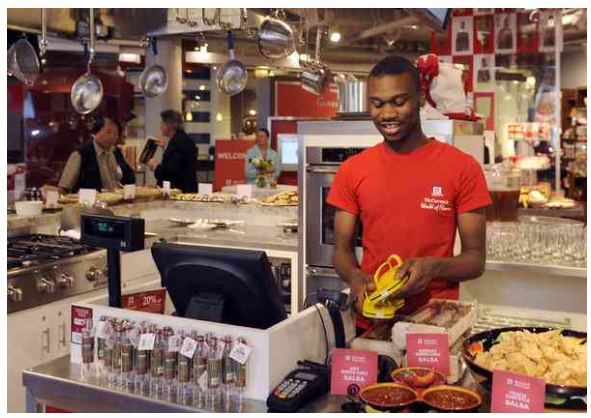
Consumer product good manufacturers are going retail.  Not sure when it started, but as an ex-P&Ger I'll give Procter & Gamble credit for starting the trend a few years ago with the launch of Tide Dry Cleaners and the Mr. Clean Car Wash
In the last few months this trend of CPG manufacturers opening their own retail stores appears to have accelerated.  McCormick recently opened a store in Maryland...

...while Dannon and Chobani have both opened up restaurants in New York City...

...and now Barilla, yep the pasta company, has also announced it will open its first restaurant.

So, what's behind this invest in retail outlets?  It's an attempt for brands to take stronger control of their value chain by owning the customer experience at point of purchase.  It also gives manufacturers a way to present, as well as boost, their brand equity in ways that aren't possible in a traditional grocery store.  Finally, it allows brands to uncover new consumer insights by directly interacting with its end users, test new products, and drive awareness.  Apparel brands have been doing this for years as they have understood the value of protecting their brand image and promoting the lifestyle aspect of their brands.  As brand experience continues to become a more important aspect of marketing, I'd anticipate this retailing trend continuing.

Wednesday, August 8, 2012

Ragu TV Ad Double Take

When a kid catches his parents in bed, Ragu can help?  What?   That's right, Ragu, the pasta sauce company, recently launched a new TV ad campaign bringing a bit of humor and shock value to break through and get noticed.  The ad is titled "A long day of Childhood calls for America's favorite pasta sauce".  Take a look...

First, the ad is hilarious and shocking, especially for an ad the made its debut during the family friendly Olympics - so it without a doubt will clearly breaks through and gets noticed.  There is also likely good brand recall, because it is is very unique, has solid branding, a catchy little jingle, and the drama at the beginning of the ad keeps you watching all the way through.  However, it doesn't exactly make me want to buy pasta sauce - if anything it makes me lose my appetite a little bit.  The big question is does the ad go too far?  Also does light and funny humor go with a thick and chunky pasta sauce? Maybe I'm over thinking this one.

New research by ad-testing firm Ace Metrix proves that while funny ads may get high marks, funniness had little correlation with effectiveness and in fact, funny ads were slightly less likely to increase desire or purchase intent than unfunny ones

Ragu's other adds this year also have a bit of spunk and humor . . . but clearly not the same level of shock value.


Now I'm clearly not the target consumer and the ad will definitely get a lot of social media buzz so it will be interesting to see how it plays out in terms of driving the business . . .in the meantime at least it gets people talking

Is the proposed NYC soda ban worth it?

A new study in the New England Journal of Medicine, one of the most respected medical journals in the world, examined the impact of the Mayor Michael Bloomberg's proposed NYC soda ban.  The soda ban would limit sugar-sweetened beverages to 16oz, essentially banning supersize drinks.

The study suggested that the 62% of all drinks currently consumed at fast food restaurants would be affected by the ban, with the mean caloric intake per beverage ~200 calories today.  The study goes on to suggest that if all these consumers downsized to a 16oz sodas, the average calorie saving per consumer would be ~60 calories per person.

So I have to ask is 60 calories per person worth the effort of the ban and the backlash/outrage associated with it?  Well, yes and no.  Yes, if you assume a person will consume those 60 calories a day every day of the year adding up to 21,900 incremental calories per year.  If you assume there are 3,500 calories per pound, that's over 6 lbs of extra sugar a year in weight, which could have serious health implications over the long-run.  But, no if you assume infrequent consumption.  Net-net, I was surprised the ban only cuts the caloric intake by 60 calories per person on average, but also surprised how quickly just 60 calories a day adds up to real numbers.

Tuesday, August 7, 2012

"There's nothing soft about it" - Sprite, really?

Sprite just launched a new marketing campaign using the tagline "There's nothing soft about it", targeting teens (my guess urban teens).  The campaign is built around the product's "intensity" and the first ad even starts with the line "This is way more intense than I was expecting!" 


While I understand the want to have a brand equity built around being intense and bold - especially for an urban teen consumer target, I think it's a bit of a strange place to take Sprite because the product profile doesn't seem to match the positioning.  Is it me, or is Sprite one of the most vanilla of beverages in terms of the flavor profile being very traditional vs. edgy?  

Given the fit with the product taste profile is a big question, I have bigger doubts on the impact of the message - just because you say your intense doesn't mean people will believe it.  The other issue I see with this new positioning is it seems to conflict with the historical brand position of being ultra refreshing.  Intense might be good in consumers' minds, but I doubt there is much overlapping association between intense and refreshing.  Net-net, I might be proven wrong in the long-run, but I think this rebranding is just a poor fit and consumers will struggle to give Sprite permission to play as an "intense" brand.

Saturday, August 4, 2012

Cool New Product: McCormick Recipe Inspirations

So I'm the farthest thing from what you'd call a chef or even in a novice in the kitchen, but in a recent shopping trip at my local grocery store I came across McCormick Recipe Inspirations - a line of convenient spice kits that built around sophisticated (at least for a non-cooker) recipes. Recipe Inspirations gives you McCormick’s recipes with each packet including the pre-measured amount of spices and herbs.


The product hits dead on the convenience trends for the consumer, and of course McCormick and the retailer win big because the price per ounce is considerably higher than if a consumer was just buying the regular spice jars.  In reality, it probably also attracts a consumer who typically wouldn't even buy all the traditional spice jars because they are less cooking involved or at least serves as a sampler pack of sorts.  My only knock is it shouldn't be shelved in the spice aisle, it would be the perfect product to place over by the chicken, meat, and fish departments.

Friday, August 3, 2012

Why is Proctor & Gamble advertising P&G?

As a former P&G marketer I'll admit that I have a lot of P&G loyalty, but every time I see one of the P&G Olympic advertisements I scratch my head.  It's not because I don't like the ads, you have to be heartless not to feel the emotion when they air the "Thank You, Mom" campaign...


...it's just I want to understand the end game for P&G.  There's no doubt the ads are emotionally moving, but the brand recall is all about P&G a large corporation that consumers have no emotional connection to, as opposed to say Pampers or Tide, which have a ton of emotional equity built up in the hearts and minds of consumers.

In short, I want to know what is the company's long-term strategy.  I say long-term because if the company was just trying to boost sales of its current business, there's no doubt it would have a higher ROI throwing this money behind an ad that builds up one of its leading billion dollar brands.

Such as these ads:


If I had to guess, the logic is that the overarching ads focused on P&G provide the backbone of the campaign and help tie all the individual brand ads together, but I'd actually suggest that the overall ad dilutes the individual brand ads because at some point they all start blending together in the consumer's mind.  Either way, its tough to try to build an emotional connection between a billion dollar conglomerate, and even if you do, then you still have the uphill battle of educating consumers on which brands are even made by the company.  Love the "Thank You, Mom" ads from a heart strings standpoint, but have a tough time believe its providing the company the biggest bang for its buck

Thursday, July 12, 2012

Is Pepsi the "next generation" of yogurt?

Early this week Pepsi announced it is entering the Yogurt market via a joint venture partnership with German dairy company Theo Müller.  The joint venture will be run as the Müller Quaker Dairy and called Müller by Quaker and will begin by being sold in the northeast US.  It appears that they will offer at least 3 different types of yogurt: conventional, Greek, and Fruit Up (fruit mousse in top of the yogurt that gets stirred in).  The yogurt will be packaged in a square contained with one corner filled with an ingredient that the consumer can mix in; including caramelized almonds, tiny chocolate-covered crunch balls and granola.
Pepsi, which in addition to its traditional beverage business also owns Quaker, Gatorade, Tropicana, and Frito-Lay, is looking to diversify its portfolio as the soda category continues to be squeezed by health trends and the company looks to jump start long-term growth.


Why Yogurt?
Yogurt offers Pepsi three advantages.  First, its a fast growing category (+9%) that outpaces traditional grocery categories as its alined with consumer health an wellness tailwinds.  Second, it gets Pepsi into a new section of the store - the dairy aisle.  And third, Pepsi could likely leverage its refrigerated Tropicana DSD network to capture significant cost scale.


Will it be successful?  
Pepsi research suggests that Americans consume ~12 pounds of yogurt a year, which is half as much as Canadians and only a third the amount of Europeans.  Pepsi attributes this gap to the US category offerings being boring vs. international offerings: “It’s been an ‘I gotta have it because it’s good for me’ kind of a product . . .The 'wanna have it' was missing” according to Dr. Mehmood Khan, who oversees PepsiCo’s global research and development and was interviewed in a recent New York Times article. According to that article, Müller by Quaker will fill the current product offering void by offering a a new variety yogurt with its own unique texture that is between Greek and conventional yogurts.  The product will be marketed under the tagline "European for Yummy".  


While General Mills (Yoplait) and Dannon make up 50% of category sales, much of the recent category growth has been driven by Greek yogurt brands Fage and Chobani.  The fact that these smaller brands have gained traction and shelf space would suggest a brand backed by a CPG manufacturer with the clout and deep pockets of Pepsi would also be able to muscle its way into the category assuming the product is truly differentiated and delicious.  It also wouldn't be surprising to see Pepsi bring its soda strategy to life in this category by supporting the brand launch with an enormous advertising budget as well as running a significant amount of promotions focuses on BOGO's and bulk discounts.  The yogurt category has seen plenty of innovation over the past several years and I believe many category consumers are willing to experiment with new brands and flavors, but the category will remain highly competitive and unlike soda its wont just be a two horse race.


In conclusion, I believe Pepsi can clearly make a splash in the category and will help fuel overall growth.  However, I have a hard time believing the brand will climb higher than a #4 share behind Dannon, Yoplait, and Private Label, and may even have a hard time in the short-term outselling some of the hot Greek Yogurt brands.  One could see the brand, perhaps, ultimately reaching a 10-15% market share over the next 3 years.

Friday, June 15, 2012

Pampers "Vertical Chair Climb"

I really liked new Pampers diapers TV commercial comparing a baby conquering his/her first chair climb to an olympic sport:
"The Vertical Chair-Climb. It's not an Olympic sport, but it takes real effort and it takes a diaper that fits their every move. Pampers Cruisers with 3-way fit adapt at the waist, legs and bottom for up to 12 hours of protection and all the freedom to play like a real champion. Pampers. Proud supporter of babies' play"

Not only does this ad immediately grab your attention, but it does a great job of letting the creative communicate the product benefit and reason to believe in a compelling manner, without beating the consumer over the head with a hard sell by packing in branding or forcing in too much of a technical product demo.


In fact the ad is far better than the following ad that's in the same "Olympic" campaign, which overdoses the viewer with very heavy branding and a few rather long technical product demo,

While the two ads communicate a similar message, the first ad does a far better job capturing a the views attention by starting with the 'drama' vs. branding and staying true to a single minded benefit and one clear reason to believe.

Wednesday, June 6, 2012

What Apple can teach marketers

Everybody recognizes Apple advertisements as some of the best in the business.  They grab your attention, they're distinct, and they entertain.  But more importantly, they flat out are some of the most persuasive ads you will ever see.  That's because Apple has the best product demos in their TV advertisements of any company out there, by far, hands down.  Nobody is better at taking a complex new technology and making it look both simple and relevant to everyday life.

The first 4 iPhone Ads:


A few iPad Ads:


The ads communicate one simple clear product benefit and then leverages a series of product demos as reasons to believe in the benefit.  The art of the product demo is in the story telling as the ads always show the product doing tasks that you'd never imagine phones or computers could do, yet doing them in such a simple fashion that it leaves the viewer wanting more.

Now the reality is that the advertisements are based on the same consumer insight as the brilliant product design - make it so simple a 3 year old can understand it.  It sounds crazy to design the latest technology with a 3 year old in mind, but Apple's on to something in making products so intuitive (If you've ever seen a 2 or 3 year old pick up an ipad and just start entertaining themselves its mesmerizing).  Too often consumer goods manufacturers try to over engineer products, when the majority of consumers will chose the simple option nearly every time.  To Apple's credit they've unlocked this better than anybody else both in their product design and advertising.

Without a doubt the discipline Apple displays in its advertisements to not only keep them simple and relevant, but more importantly staying true to the product's primary benefit deliver a persuasive sales pitch.

Tuesday, May 4, 2010

What Gatorade Got Wrong...

If you read my lost post, I praised Gatorade's launch of G Series as an initiative with very strong business building potential because it helped reduce consumer confusion and increasing the brand's shelf presence. This post, however, takes a harsher stance on Gatorade's push to take their brand re-stage one step farther by also launching a premium priced line-up "G Series Pro". http://www.gatorade.com/default.aspx#gseriespro?s=gseriespro

G Series Pro is marketed as:
"Only available in pro locker rooms... until now. Originally developed
exclusively for pro athletes and grounded in years of hydration and sports
nutrition research at the Gatorade Sports Institute (GSSI)."

Now I get where Gatorade is coming from...trade in/across with G Series and then leverage G Series Pro to trade consumers up and capture a piece of the higher margin speciality market. I'm sure the consumer research shows very clear and distinct consumer segments that they believe they can better target with two line-ups.

That said, I think the positioning of the premium line-up has serious flaws that risk undermining the entire brand. By positioning G Series Pro as the line-up for pro athletes - where does that leave the base G Series line? Wasn't Gatorade's entire image built off of the fact that this is what the real pro's drank?

Recall the TV ads Gatorade built it's entire equity such as "I want to be like Mike ad". http://www.youtube.com/watch?v=b0AGiq9j_Ak

Well, evidently real athletes don't drink Gatorade anymore they only drink G Series Pro. Actually, what Gatorade is saying is real athletes haven't drank regular Gatorade for quite sometime. It may be good enough for you and me, but it's not good enough for real pro athletes anymore.

At the heart of Gatorade's flaw is that by lifting up the "Pro" line, they are degrading the base line - which is worrisome because it's always going to be the bulk of their business. Critics will say it's only on sale (at least for the time-being) exclusively at GNC (because evidently that's where 'real' athletes shop) and it will be marketed towards a small, specific niche, so it shouldn't interfere with the base line.

Maybe I'm being too tough, but it's not too often you see a business knock itself off the top of a mountain. To me, Gatorade or G Series or whatever they want to call the base business has lost some of it's magic, lost some of it's flair, and it's on the verge of being just another generic sports drink ala Powerade.

Gibberish Grade = D.